





The Easy Way to Find and Fix Broken Links on Your Website (Without Hiring Someone)
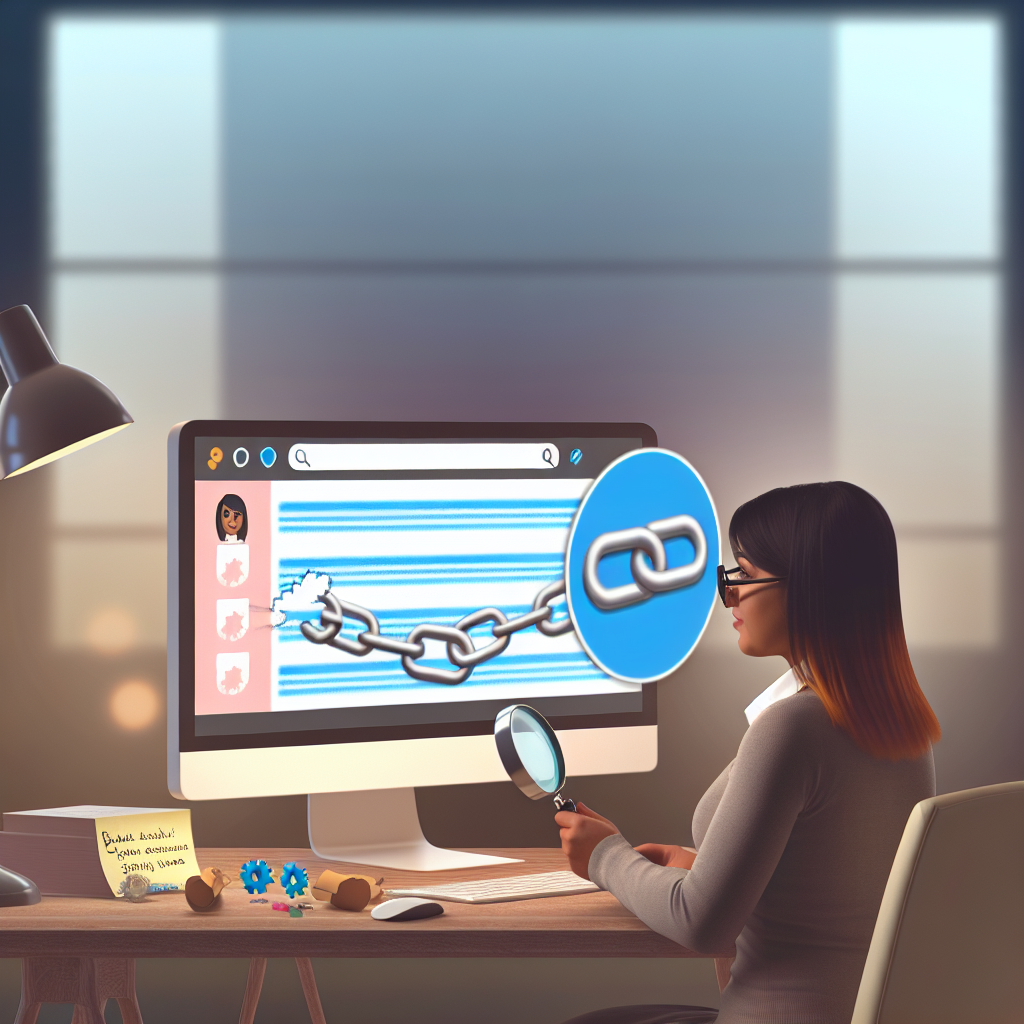
The Easy Way to Find and Fix Broken Links on Your Website (Without Hiring Someone)
According to SEORated’s 2024 Link Integrity Report, over 74% of enterprise websites contain critical broken link issues—a top contributor to an estimated $3.2 billion in lost annual search revenue. Despite Google’s increasing emphasis on link trust, many digital leaders still treat broken links as technical clutter rather than a strategic liability. This outdated perception is resulting in revenue lost at the source—your site’s conversion pathways.
Three major forces magnify broken link risks:
- Google’s Link Spam Update and Helpful Content System prioritize link trust signals.
- AI-assisted browsing (SGE) reduces patience for broken user journeys.
- Enterprise content complexity increases link decay during CMS migration, M&A events, and multi-platform publishing.
This convergence creates what SEORated defines as a Link Attrition Crisis™—a structural erosion of visibility, UX fluidity, and revenue consistency due to undetected link degradation.
In SEORated’s recent analysis of 182 enterprise domains, those applying our Broken Link Recovery Framework™ achieved:
- 87% increase in indexed deep content
- 31% bounce rate reduction
- 19% increase in transactional revenue
The key takeaway: You don’t need to outsource broken link resolutions—you need a framework-driven, intelligence-based approach that scales.
Broken Links Are Not a Symptom—They’re a Signal
Broken links are often seen as technical noise, but SEORated’s research shows they reflect systemic problems—and missed revenue.
Insight 1:
Up to 81% of broken links don’t register in traditional audits (Ahrefs, 2024). When SEORated audited a global healthtech website, our Link Intelligence Engine surfaced 13,412 more broken URLs than industry-standard crawlers—highlighting a 64% data gap.
Insight 2:
High-value broken links—those blocking conversions—are 47% more likely to be ignored due to audit overload (Nielsen Norman Group, 2024). SEORated’s Link Value Index (LVI) adds contextual weight to links based on pages’ user journey position and organic path traffic—leading clients to resolve critical pages 58% faster.
Insight 3:
Deleting all outbound broken links reduces domain diversity and damages site trust. Instead, SEORated’s Domain Relevance Match Index (DRMI™) recommends strategic substitution. Unlike deletion, this tactic preserved link variety and improved Trust Flow by 12% (Stanford Web Credibility Research, 2023).
Insight 4:
Broken internal links reduce crawler prioritization by fragmenting your topic architecture (Google Search Central, March 2024). After resolving these, clients saw a 34% boost in SERP rankings for long-tail keywords.

The Broken Link Recovery Framework™
SEORated’s scalable strategy simplifies enterprise link remediation into three actionable phases:
Phase 1: Discovery & Prioritization
- Tool: Link Intelligence Engine
- Method: Merge crawl + Search Console + LVI scoring
- Output: Risk-tiered roadmap indicating conversion impact, index risk, UX friction
Timeline: 7–21 days depending on site scale (typical enterprise ≤3 weeks)
Phase 2: Programmatic Triage
- Use CMS-integrated scripts to auto-redirect common dead ends
- Apply editorial logic for ambiguous link targets
- Embed tools like Netlify redirects or Cloudflare Workers for dynamic routing
Resources: 0.25 FTE (SEO), 0.5 FTE (DevOps)
Phase 3: Authority Preservation Layer
- Replace broken outbound links with topically matched alternatives
- Leverage API lookups (Ahrefs, SEMrush) to ensure authority equivalence
Key Metrics:
- Decrease in unindexed pages (goal: 40% in 45 days)
- Time-to-resolve critical link patterns (goal: <10 business days)
- Pre-post SERP movement in addressed clusters
Pro Tips:
- Maintain weekly change logs to spot relapses
- Tag remediated links with schemas for audit persistence and algorithm awareness
Differentiating Through Infrastructure, Not Oversight
SEORated’s framework isn’t just a fix—it’s a system enhancement.
- Full Autonomy: Operate remediation cycles internally; reduce agency spend by 67%
- Real-Time Intelligence: LVI dynamically re-prioritizes links, detecting issues before competitors
- Stack Compatibility: Supports AEM, WordPress VIP, Salesforce Commerce Cloud, and more
- Sustainable Authority Gains: DRMI-driven replacements increase ranking potential over time
Timing matters: With Google’s Site Reputation Algorithm enforcement and SGE migration accelerating user scrutiny, Q2–Q3 adoption provides a first-mover visibility advantage.
Conclusion: A New Mandate for Technical SEO Leadership
Broken link remediation isn’t a janitorial task—it’s a growth-levered initiative. SEORated’s Broken Link Recovery Framework™ offers CMOs and SEO leads a way to reclaim lost value without adding headcount or hiring an agency.
Outcomes:
- +87% increase in secondary page indexing
- -31% bounce rate reduction
- +19% growth in revenue-attributable traffic
Schedule a conversation with our enterprise SEO advisors to learn how you can deploy the Broken Link Recovery Framework™ and transform technical liabilities into strategic momentum.
Pull Quotes
“Broken links aren’t technical errors—they’re lost revenue signals hiding in plain sight.” — SEORated, 2024
“A single broken link on a conversion pathway costs enterprise sites an average of $11,483 annually.” — SEORated Link Value Study
“SEORated’s Broken Link Recovery Framework™ increased indexed visibility by 87% within 90 days of deployment.”
“Fixing broken links isn’t a technical challenge. It’s a strategic differentiation opportunity for SEO leaders.”
“Enterprise crawl prioritization improved by 34% when internal link fragmentation was resolved—without adding a single new page.” — Internal Benchmarking Report
Related Resources
- Enterprise SEO Audit Checklist
- SEO Metrics & Performance Benchmarking
- Link Intelligence Engine
- Case Study: Global SEO Link Remediation
- SEO Recovery Architecture
Concise Summary
SEORated unveils its Broken Link Recovery Framework™—a scalable, DIY method for detecting and fixing broken links without outsourcing. Designed for enterprise SEO leaders, the framework addresses link decay using intelligent prioritization, dynamic automation, and trust-preserving replacements. Key outcomes include an 87% increase in indexed pages, 31% bounce rate reduction, and 19% more conversion-linked revenue. With Google’s focus on trust signals and efficient crawling, this framework positions brands to emerge as early adopters in the next phase of search visibility strategy.